
ACRM Milestones Since 1923
This information was obtained from historical records, conference proceedings, and other documents of ACRM. This is in no way intended to reflect the comprehensive history; and therefore, it is highly likely that many significant events are not included. It is intended as an encapsulated sampling of those events and markers along the way that reflect the evolution of ACRM.
ACRM Celebrates 100 Years!
View list of all ACRM Presidents >>>
2019 – Present
 President, Pamela Roberts, PhD, OTR/L, SCFES, CPHQ, FNAP, FACRM
2017 – 2019
 President, Deborah Backus, PT, PhD, FACRM
2015 – 2017
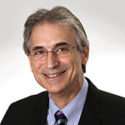 President, Douglas I. Katz, MD, PhD, FACRM, FAAN
2013 – 2015
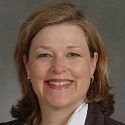 President, Sue Ann Sisto, PT, MA, PhD, FACRM
2011 – 2013
 President, Tamara Bushnik, PhD, FACRM
The ACRM launches its new logo, which has a clean, modern look in keeping with the commitment to cutting-edge research and innovation. The overlapping petals of the lotus flower logo visually communicate the interdisciplinary culture of ACRM. The seeds of the lotus, like ACRM, remain viable for many, many years; the oldest lotus seeds known to exist are 1300 years old. Approaching its 90th year, ACRM is vibrant and growing. The lotus is a symbol of rebirth, rising from dark and muddy waters; similarly, the ACRM community works to bring about new beginnings for people affected by disabling conditions.

2011
 President, Gary Ulicny, PhD, FACRM
Under the leadership of Gary Ulicny and Jon Lindberg, a new Governance model was implemented to clearly delineate roles and responsibilities of the board of governors and management. ACRM targeted business growth and development and set a course to become THE professional organization for rehabilitation research. Under the leadership of Marcel Dijkers, the contract with Elsevier was renewed for publication of the Archives.
2010
 President, Joseph Giacino, PhD, FACRM
After a comprehensive analysis of ACRM’s records raised questions about the actual size of the membership and fiscal health of the organization, a broad-scale effort was launched under the leadership of Jon Lindberg to re-vamp ACRM’s management structure and operating systems. To engineer the required changes, a new business model was adopted, premised on Lindberg’s 5M Model™ of association management: membership, meetings, media, marketing and management. The 5M Model led to numerous accomplishments, including reconfiguration and relocation of the national headquarters from Chicago to the Rehabilitation Hospital of Indiana, launch of a two-part Membership System Recovery Plan, consolidation of the Archives editorial office and investment in outside consulting firms to assist with the ACRM rebranding campaign. A major campaign was spearheaded to develop new rehabilitation-related products to support our members and advance rehabilitation science.
2009
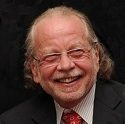 President, Wayne Gordon, PhD, ABPP/Cn, FACRM (photo)
Rick Morgan, long-time ACRM executive director, resigned. Much of the year was devoted to the search for a new director. The process ended when Jon Lindberg was hired in September 2009, shortly before the annual meeting in Denver.
2008
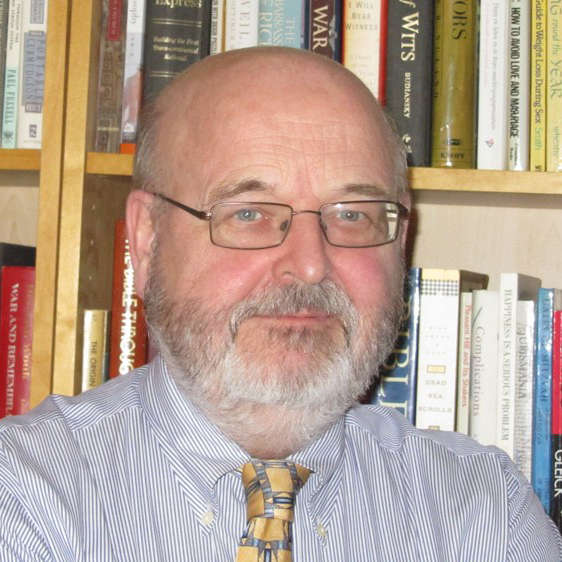
President, Marcel Dijkers, PhD, FACRM
ACRM held its first-ever annual meeting outside the USA, in Toronto, Canada, in conjunction with its partner, the American Society of Neurorehabilitation, and with the Ontario Rehabilitation Research Advisory Network. This was part of an ongoing effort at internationalization, which also included overtures by the Archives Steering Committee to professional societies in Europe and elsewhere, to determine an interest in making the Archives available to their members as the official journal of the respective societies. Another main focus of activities of BOG, staff, and Archives editors was the implementation of many changes required by the imminent sole-ownership of the Archives by ACRM, including retention of Academy members as subscribers.
2007
 President, Gerben DeJong, PhD, FACRM
ACRM strengthened its international outreach by inviting the European Society for Physical Medicine and Rehabilitation to become a more integral part of its annual meeting held in Washington, DC, a meeting that broke previous attendance records following its separation from AAPMR in the early 1990s.Midway through the year, ACRM’s immediate past president, Mitchell Rosenthal, died unexpectedly. ACRM established the Mitchell Rosenthal Memorial Lectureship in his honor. The inaugural lecture was given by Lee Woodruff, wife of Bob Woodruff, ABC News co-anchor and brain injury survivor.ACRM took sole ownership of the Archives of PM&R and signed a 5-year contract with Elsevier, the Archives publisher. This placed ACRM on a much stronger financial footing.
2006
 President, Mitchell Rosenthal, PhD, ABPP, FACRM
During Mitch Rosenthal’s term, the Congress, Academy and Elsevier agreed to a 3-year contract through December 31, 2008. The board of governors’ commitment to Archives to fulfill ACRM’s focus on promoting rehabilitation research and facilitating knowledge transfer was clearly evident during these discussions.
2005
 President, Allen W. Heinemann, PhD, ABPP, FACRM (Photo)
Much of Congress’ history has been distinguished by collaboration with the American Academy of Physical Medicine and Rehabilitation on essential concerns. In 1961 the Congress invited the Academy to adopt Archives of Physical Medicine and Rehabilitation as its official publication, which the Academy accepted. During Heinemann’s presidency, representatives from each association’s board met to revise an agreement with Elsevier to publish Archives after their contract expired at the end of 2005.
2004
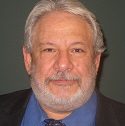 President, Keith Cicerone, PhD, ABPP, FACRM (photo)
The Clinical Practice Committee was established in its current form, with the intent of reinforcing the ACRM commitment to “evidence-based clinical practice.” Initially intended to integrate existing research, the CPC has expanded its role and structure and is currently a vibrant aspect of the ACRM mission. A procedural change was enacted to require a slate of candidates for every elected office and board position, thus strengthening the voice of the general membership in the election of board of governors members.
2001 – 2002
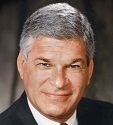 President, Martin Grabois, MD, FACRM (photo)
The years 2000-2002 were a challenge for the organization’s finances and leadership. We had separated from the AAPM&R, separated from AAP management, and set up a joint meeting with the American Society of Neurorehabilitation. With the help of the board of governors and our membership, we righted the ship, setting up a period of growth for the ACRM.
2000
President, Steven Hinderer, MD
The ACRM struggled to survive because of the recent separation from joint meetings with the AAPM&R. Membership was declining and the board of governors voted to hire the management of the AAP to provide more direct and committed day to day support of the organization, which helped to stabilize the finances and conduct autonomous annual meetings. Ric Morgan became executive director at this time.
1998
 Theodore M. Cole, MD (photo) is the second to serve two terms as president of ACRM- 1993 and 1998. Evidence of the changing focus on relevant rehabilitation research is reflected in articles published in the Rehabilitation Outlook and in the content of the annual educational conference. ACRM celebrates its 75th Anniversary during the annual meeting held in Seattle November 8-10, 1998. The anniversary committee, chaired by Robert H. Meier III, MD, coordinated a number of events and activities in celebration of this momentous occasion. While celebrating the rich traditions of the American Congress of Rehabilitation Medicine, there has been a renewed commitment to the vision and future of ACRM.
1997
 Continuing the evolution, the Board of Governors conducted an extensive study of the field of medical rehabilitation associations and professionals to determine the need and focus for ACRM in the future. Based on the findings and the coincidental release of the Institute of Medicine Report, Enabling America, the Board of Governors committed to a focus devoted exclusively to relevant rehabilitation research for those who generate, utilize, or fund rehabilitation research. In her presidential address, Karen Hart, PhD (photo), presented the rationale, process, and implementation plans for the new focus on this unfulfilled niche within the rehabilitation community.
1996
The Board of Governors began articulating a new vision for ACRM. It was developed in response to the changing dynamics within the healthcare environment and changing demographics within the membership of ACRM. Board members acknowledged that a new paradigm for ACRM needed to evolve if the association was to flourish in the future.
1995
 Continuing with the transition of the organizational structure, a total of six members-at-large were seated on the Board of Governors. Thomas P. Dixon, PhD (photo), who was the last individual to be elected as Fifth Vice President, ascended to the Presidency. Under Tom Dixon’s direction, the corporate membership program began to expand substantially.
1993
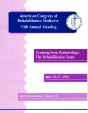 The first independent annual meeting of ACRM was held in Denver, CO. This was the first meeting held independently from the American Academy of Physical Medicine and Rehabilitation since 1938. Over 625 registrants participated in the meeting.
1992
Over 980 ACRM members attended the combined meeting of the Congress and American Academy of Physical Medicine and Rehabilitation in San Francisco. Further enhancements to the organizational structure were proposed but defeated by the present members.
1991
At the annual meeting in Washington, DC, organizational politics focused on the changes resulting from the decision to separate from shared offices and management. Revisions to the constitution and bylaws were debated during the annual business meeting. Substantive changes included a restructuring of the board of directors to eliminate the succession through multiple offices to the presidency. An executive committee was established and provisions requiring submission of an annual budget were included.
1990
 Dorothy Gordon, DNSc (photo), presided over a year of significant change for the Congress. The American Congress of Rehabilitation Medicine separated operationally from the shared offices and management of the American Academy of Physical Medicine and Rehabilitation. ACRM was visibly involved in support for the Americans with Disabilities Act, which was signed into law on July 26, 1990.
1989
 The first Distinguished Member Award was presented to Mary Romano, MSW (posthumously). The first Edward W. Lowman (photo) Award was presented to Wilbert Fordyce, PhD.
1987 – 1988
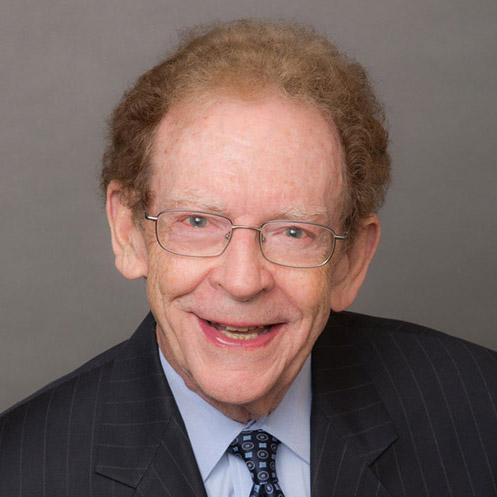 President, John Melvin, MD, MMSc, FACRM
On behalf of ACRM, William Spencer provided congressional testimony in support of creation of the NIH National Center for Rehabilitation Research. The board supported establishment of the Brain Injury Interdisciplinary Special Interest Group and approved initiating the Distinguished Member Award and Edward Lowman Award.
1987
 The annual meeting held in Orlando, FL, was presided over by Dorothea Glass, MD, whose presidential address, “Accessibility and the American Congress of Rehab Medicine,” reflected the conference theme.
1986
Rehabilitation professionals with bachelor’s degrees were admitted into membership. ACRM’s membership grew from 2,902 members in 1986 to 3,360 members in 1989.
1980
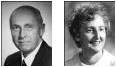 The first Elizabeth and Sidney Licht (photos) Award for Excellence in Scientific Writing was presented to Carl Granger, Gary Albrecht, and Byron Hamilton for their article “Outcomes of Comprehensive Medical Rehabilitation: Measurement by PULSES Profile and the Barthel Index.”
1979
 The first official meeting of the ACRM Head Injury Task Force, chaired by Sheldon Berrol, MD (right, with Tom Anderson, MD, left), took place at the annual meeting. Now known as the Brain Injury ISIG, this group has been very influential in the development of standards and guidelines in the brain injury rehabilitation field over the past twenty years.
The article “Independent Living: From Social Movement to Analytic Paradigm” by Gerben DeJong, PhD, was printed in the October issue of the Archives. This landmark article was reprinted sixteen times and translated into seven languages.
1978
The annual conference in New Orleans, LA, boasted over 350 presenters, in a variety of formats ranging from panel discussions and didactic lectures to papers and posters. Key topics addressed were Sexuality and Disability, the Independent Living movement, and Measurement and Evaluation models.
1977
 The first nonphysician ACRM President, June Rothberg, PhD RN (photo), took office. In her presidential address entitled “…And It Came to Pass,” she focused on the evolution of ACRM from unidimensional to multiprofessional in scope and interest.
1976
 The first prize in the scientific exhibit competition was awarded to the Sexuality and Disability exhibit presented by Sandra and Ted Cole. (Sir Ludwig Guttmann, the world’s preeminent expert on spinal cord injury and medical director of Stoke Mandeville Hospital in England, attended that meeting and praised the exhibit as a first in the field.) This exhibit led to the establishment of the Sexuality and Disability Task Force. The task force changed its name to the Sexuality Interdisciplinary Interest Group which in turn led to the creation of ACRM’s first Special Interest Group. This was the genesis of today’s Interdisciplinary “SIGs,” the I-SIGs.
1975
ACRM’s Social and Environmental Aspects of Rehabilitation (SEAR) Committee was formed to work in collaboration with the Legislative Committee in making legislative recommendations and in developing model architectural barrier legislation. During the Carter administration, under the direction of Chair Nancy Crewe, PhD, SEAR was asked to examine some of the issues involved in independent living and to prepare a position paper that could be used in testimony. SEAR’s involvement in the independent living movement led to the 1978 Amendments of the Rehabilitation Acts of 1973.
1973
 ACRM formed the Ad Hoc Committee on Rehabilitation of Children to address the unique needs of this population. The committee was active for over a decade and included the work of physicians such as Dennis Mathews, Michael Alexander, Gabriella Molnar, Bruce Gans, and other noted pediatric physiatrists. One of the most notable achievements of this committee’s efforts was the allotment of more time in ACRM meetings to pediatric programs (photo).
 A major exhibition tracing the development of physical medicine in the United States in the past 200 years opened at the Smithsonian Institution in Washington, DC, under sponsorship of the American Congress of Rehabilitation Medicine. Entitled Triumph Over Disability, the exhibit was planned as part of the observance of the 50th anniversary of the founding of ACRM.
1972
 The PDC published the landmark report Development of the American Congress of Rehabilitation Medicine into a Multidisciplinary Professional Society. As noted in the introduction of the report, “his report reviews the methodology by which reorganization [of the association] was accomplished and records the progress made in restructuring membership, program, publications, and governance.” ACRM President Herman J. Flax, MD (photo), was the Project Director and John W. Goldschmidt, MD, and Edward Lowman, MD, were the principal investigators.
1970
Another constitutional amendment opened the membership to rehabilitation professionals with earned master’s degrees. ACRM’s membership grew from 1,572 members in 1970 to approximately 1,940 members in 1973.
1968
The first Interdisciplinary Forum was held, supported by a training grant from the Department of Health, Education and Welfare Rehabilitation Services Administration. It was attended by 142 physicians and 196 nonphysicians. Some of the topics included “Stroke,” “Intellectual-Perceptual Deficits and Implications for Team Management,” and “Operating Conditioning.”
1966
 A group of forward-looking physicians in the Congress recognized the need for a forum in which members of various rehabilitation disciplines could share their professional, scientific, and technical talents. An amendment to the Congress constitution extended membership privileges to persons “holding an earned doctoral degree and active in and contributing to the advancement of the field of rehabilitation medicine.” This allowed membership to be extended to psychologists, nurses, physical therapists, occupational therapists, speech pathologists, social workers, vocational counselors, and others. Membership grew from 1,195 members in 1965 to 1,458 members in 1967. The name was officially changed once again, to the American Congress of Rehabilitation Medicine.
1965
 A thorough study of the Congress and its functions was begun with the formation of the Professional Development Committee (PDC) under the chairmanship of John W. Goldschmidt, MD (photo). Some impressive accomplishments of the PDC include a study of the objectives, constitution, and structure of the Congress, sponsorship of interdisciplinary forums, and a broadening of the membership. The PDC contributed significantly to the management and direction of ACRM for thirty years.
1954
 Walter J. Zeiter, MD (photo), concluded the fourth Coulter Lecture by stating, “Our history has been crowded with individuals, ideas, and actions that have fostered our growth. We have a proud past, and I have every confidence that we will have an illustrious future.”
1952
 Increasing recognition of the relationship between physical medicine and the rapidly growing field of rehabilitation resulted in a change in name to the American Congress of Physical Medicine and Rehabilitation. The official name of the journal changed to its present name, Archives of Physical Medicine and Rehabilitation the following year.
1951
 The first John Stanley Coulter Memorial Lecture was presented by Kristian G. Hansson, MD, and it highlighted the many contributions of John S. Coulter, MD (photo), the third association president.
1949
During the annual meeting the membership voted to collaborate with the British Association of Physical Medicine in the formation of an International Federation of Physical Medicine.
1945
The 24th Annual Meeting was canceled at the request of the National War Committee on Conventions. This was the first and only time since the Congress was founded that an annual meeting was not held.
The name of the journal became the Archives of Physical Medicine. The term physical medicine represented a change of emphasis from the purely clinical to the scientific and diagnostic basis of the medical use of physical agents. It also served to clarify the distinction between physicians and technicians of physical therapy, a stance the American Medical Association (AMA) had recently adopted.
1944
The Congress again changed names, to the American Congress of Physical Medicine.
1939
 A specialty society was founded called the Society of Physical Therapy Physicians, which became the American Academy of Physical Medicine and Rehabilitation in 1956. The society was restricted to physicians who devoted themselves exclusively to the practice of physical therapy. The Archives was designated as its official journal.
1938
The journal name was shortened to Archives of Physical Therapy due to the decreased emphasis on X ray and radium.
1933
In another change reflecting the times, the American Congress of Physical Therapy assimilated the American Physical Therapy Association, whose membership was comprised solely of physicians. Albert F. Tyler, MD, was elected as president of the newly configured association.
1932
 The first Gold Key Awards were given to a total of seven people, including William L. Clark, F. Howard Humphris, and Albert F. Tyler
1926
 The journal, which began publication in 1920, changed its name to the Archives of Physical Therapy, X-ray, Radium and was declared the official journal of the American Congress of Physical Therapy. In 1930, Albert F. Tyler, MD, presented the Archives to the Congress as a debt-free, unencumbered gift.
1925
 The trend toward specialization in medicine resulted in a separation of radiology from physical therapy and a change in name to the American Congress of Physical Therapy. The 1925 Annual Meeting of the Congress was promoted in the Journal of Radiology.
1923
The Congress was founded as the American College of Radiology and Physiotherapy, a professional association of physicians who used physical agents to diagnose and treat illness and disability. The first elected president of the organization was Samuel B. Childs, MD.